


Building an immersive, moody atmosphere inside a home requires controlling the visual landscape. One of the most effective styling tools to anchor a theme is a fabric backdrop curtain. It can instantly block out unwanted exterior light, soften harsh architectural lines, and introduce rich, light-absorbing textures into a room.
However, executing a seamless backdrop setup within a real-life home footprint—especially inside a condo or an intimate multi-level space—comes with distinct structural challenges. You don't have the luxury of drilling permanent holes for a temporary party, and standard commercial event gear can easily overwhelm a room.
Based on my real-world styling workflow, here are the three critical backdrop mistakes you must avoid to keep your home pristine, your design premium, and your portfolio photographs flawless.
Mistake 1: Relying on Over-Hyped Adhesives or Cumbersome Stands
The internet is filled with party guides recommending commercial backdrop stands or heavy-duty adhesive wall hooks. In a standard-sized home, both of these methods are massive design traps:
- The Stand Fallacy: Freestanding commercial metal pipe-and-base stands are incredibly bulky, rigid, and cumbersome. They eat up precious walking space and instantly make a warm home environment feel like an uninviting photo studio.
- The Adhesive Trap: Despite the flawless marketing claims made by damage-free brand hooks, pulling strong adhesives off drywall frequently rips the interior paint clean off when taken down.
The Fix:
Work with the permanent architecture of your home. If you are styling a dramatic backdrop over a window or balcony door, simply source gorgeous, theme-specific drapes and hang them directly using the sturdy curtain rods that are already in place. If you need to construct a temporary partition—such as a backdrop behind a kitchen counter to completely mask the culinary prep mess—wedge an extra-long tension rod securely between the walls. It gives you absolute stability with zero wall damage and zero footprint loss.
Mistake 2: Forgetting the "Camera Translucency" Test
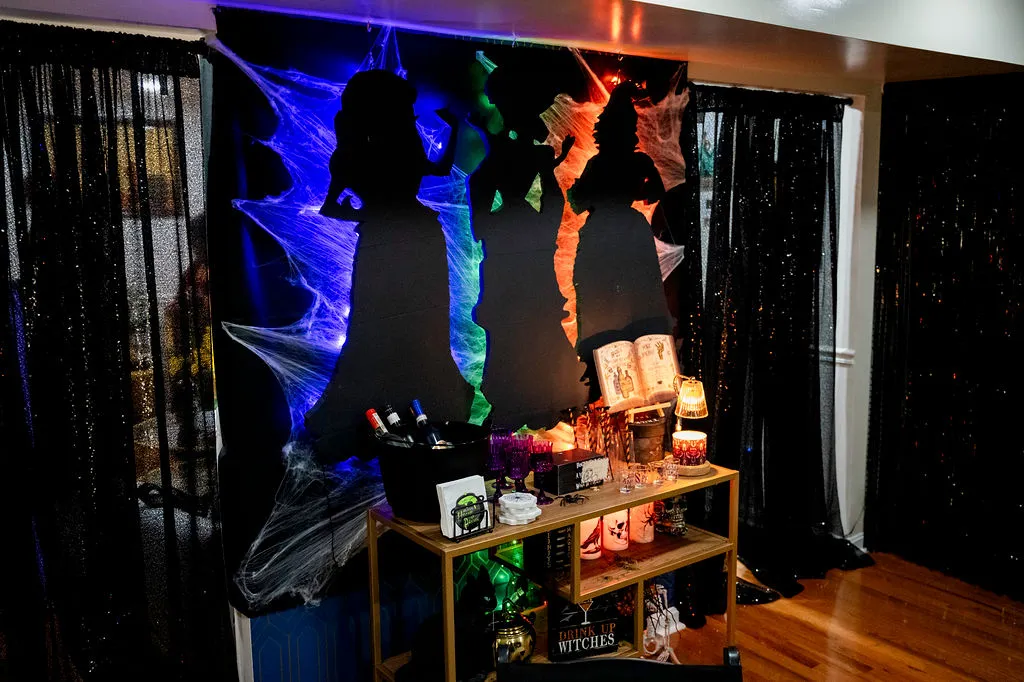
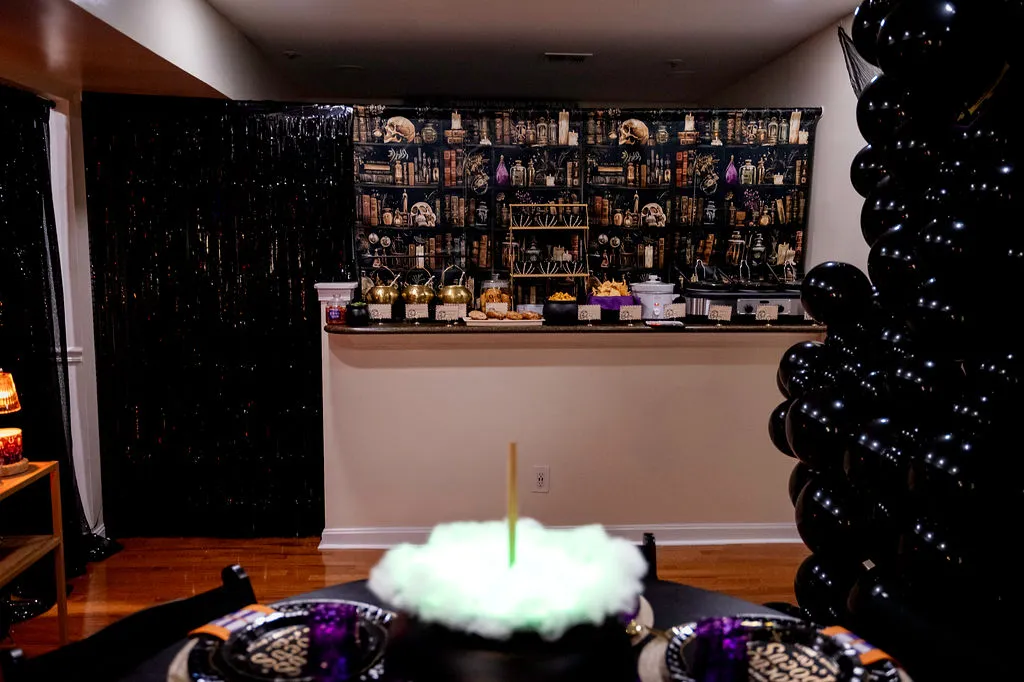
Nothing disrupts photos faster than checking your professional photos after an event and realizing your dark, mysterious backdrop was actually semi-transparent. For my Hocus Pocus gathering, I styled gorgeous black sequin curtains inside the twin doorways connecting the living and dining rooms. Under the naked eye during the party, they looked fantastic. But when the camera hits a sheer or sequined textile, it acts like a literal window—revealing the brightly lit room, stray furniture, and background clutter behind it.
The Fix:
Never trust how a fabric looks in a fully lit room. Long before the event, hang your backdrop drapery, turn on the lights in the adjoining room, and snap a quick test photo using your smartphone with the flash turned on. If any background elements bleed through the textile, you must layer a heavy, opaque blackout fabric liner directly behind the decorative drape to completely kill the transparency or purchase new drapery/fabric.
Mistake 3: Letting Over-Styled Fabric Overwhelm a Compact Space
In large commercial event spaces, designers routinely buy extra-long fabric panels so they can heavily "pool" and puddle the material across the floor for a dramatic look. When attempting to copy this look inside an intimate residential layout, it instantly transforms from luxury design into a massive safety hazard. Heavy fabric pooling on a condo floor eats up precious floor space, catches on chair legs, and serves as a major tripping hazard for your guests.
The Fix:
Keep your lines clean and functional. Measure your lengths so that your seasonal curtains hit the floor surface perfectly without bunching or gathering. This sharp, tailored drop preserves every inch of your walking path, keeps the room's energy feeling orderly, and delivers a sleek, high-end look that complements the room without crowding your guests.